
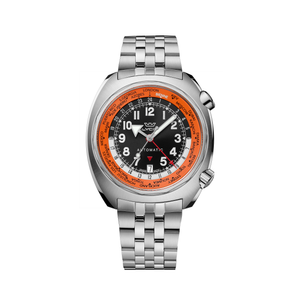
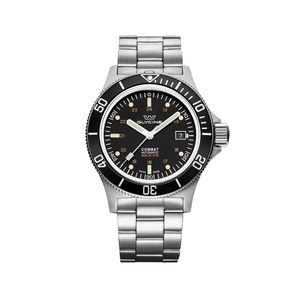
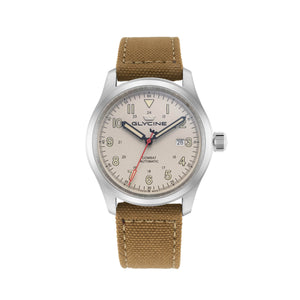
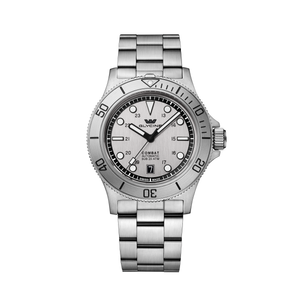
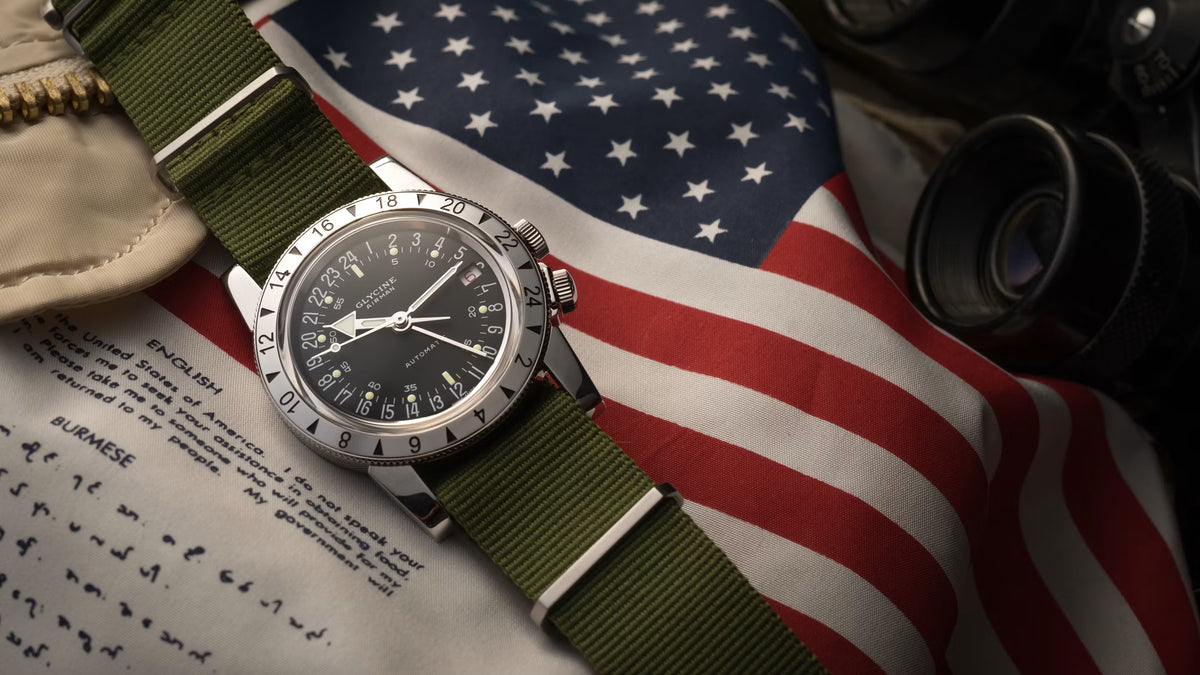
The Original GMT, Since 1953
The Airman started as a simple idea: give pilots a way to read the time at home and in the air, at a glance.
The Request
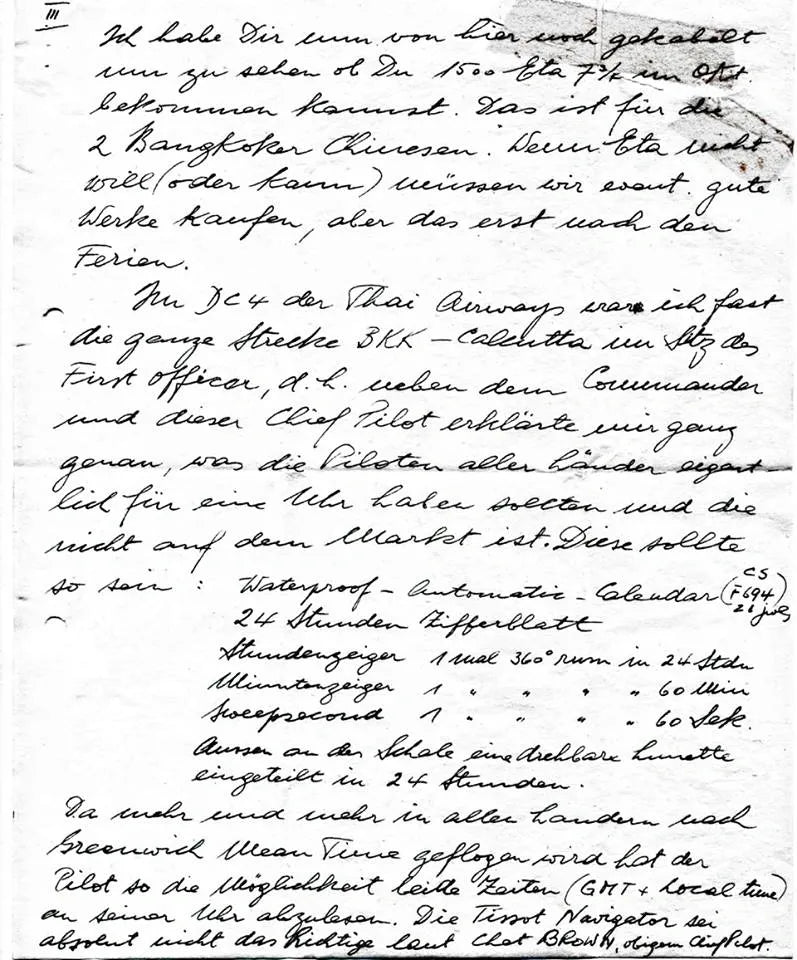
It started with a conversation, not a design brief. In 1953, British pilot and commander Chat Brown told us the watch he needed for the cockpit simply didn't exist yet: something that could read two time zones at a glance, keep working through the vibration and pressure changes of flight, and never leave a pilot guessing whether it was morning or night wherever he'd landed. We took that conversation seriously, and within months, working in close consultation with pilots to make sure every detail served a real cockpit need, we had built it: the Airman. It was a tall order for a watch industry that, at the time, had no real answer for a pilot flying across time zones in a single day.
The Solution
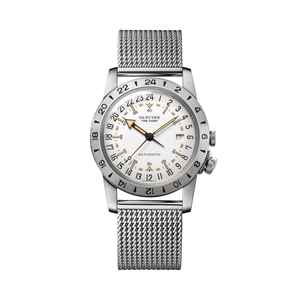
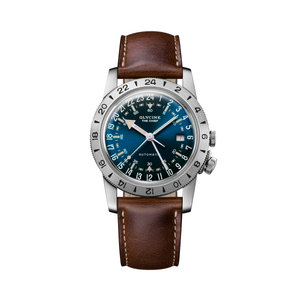
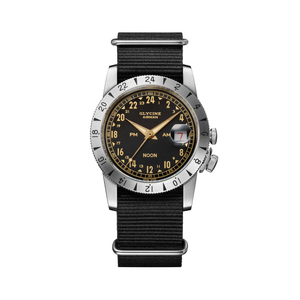
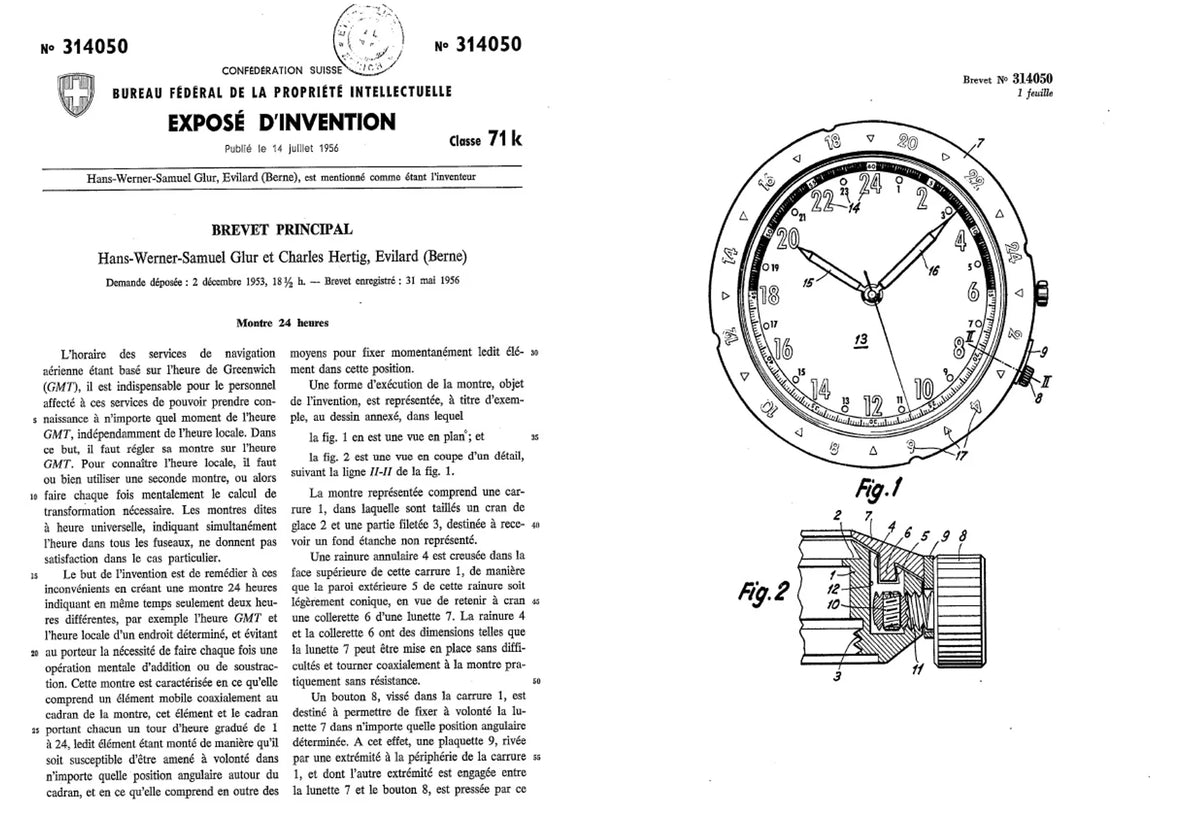
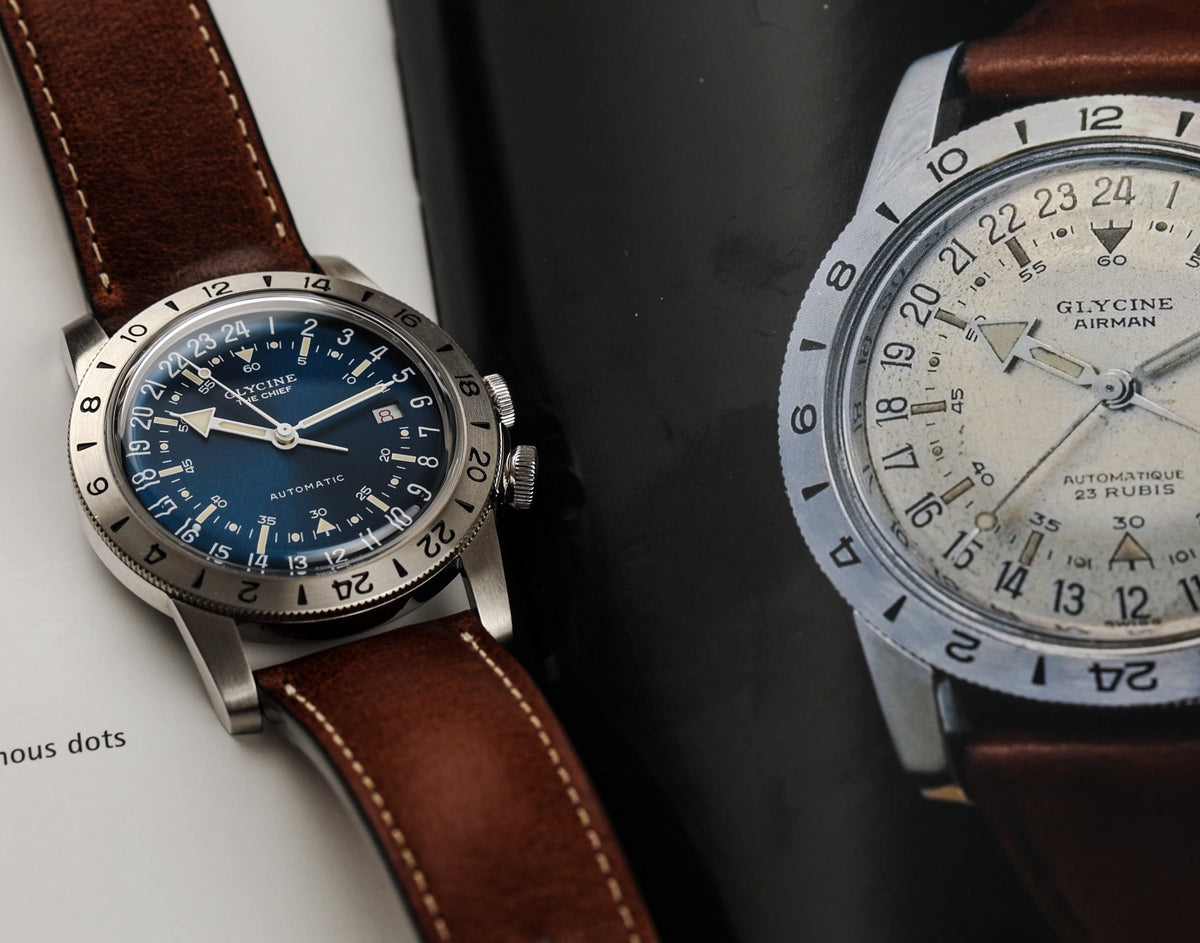
The challenge wasn't just adding a feature, it was rethinking how a watch told time. We built a 24-hour dial instead of the usual 12, paired it with a rotating, lockable bezel engraved with the hours, and set it on a Felsa automatic movement that could take a beating. Read together, the dial and bezel let a pilot track home time and local time in a single glance, no math, no second watch, no guesswork. We patented the concept that same year, confident that what we'd solved for one pilot would matter to every pilot who came after him.
Taking Flight
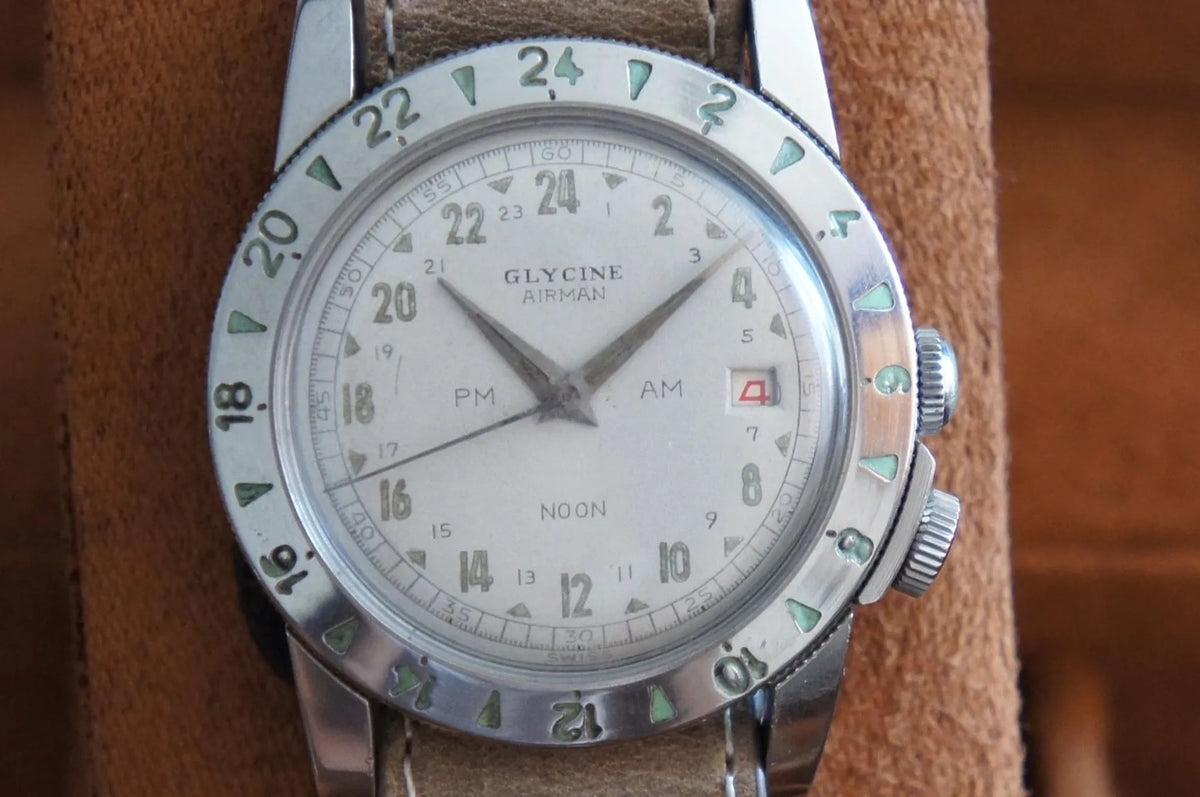
The result spoke for itself. The U.S. Air Force adopted the Airman for its own pilots, stocking it in exchange stores on military bases so servicemen could track home time and combat-zone time simultaneously. Commercial aviation caught up fast behind it, and as jet travel expanded through the 1950s, civilian flyers and frequent travelers adopted the Airman just as quickly as the military had. What started as a favor for one pilot became a watch flown by thousands, worn on military bases and commercial flight decks alike. Within a few years, the Airman had gone from a single prototype to one of the most recognized tool watches in the sky.
The Legacy
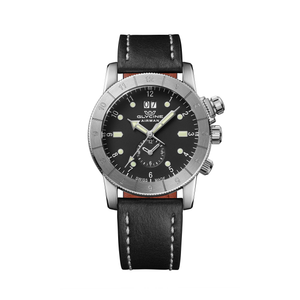
Looking back, the Airman's timing matters as much as its design. We built it in 1953, years before dual-time-zone watches became a category of their own, and that head start let us help define what a GMT watch was supposed to do before the term was common language. As global air travel grew through the following decades, the idea we'd built for one pilot's cockpit became something travelers everywhere came to expect from a serious watch. Every generation since, from the original Airman No. 1 through the Vintage, SST, and Contemporary lines, has carried that same 24-hour dial and rotating bezel forward. It's a lineage that proves the idea we built for one pilot in 1953 was right the first time, and it still is today.
Discover the historic Airman GMT:


